Reasons and Persons, Part Three
Identity is not what matters
You are sure that you will wake up tomorrow as the same person who goes to sleep tonight. Derek Parfit asked what that fact consists in, and found that it is less deep than it seems, and matters less.
Parfit (1942–2017) was a fellow of All Souls College, Oxford, for more than forty years. Part Three of Reasons and Persons (1984), chapters 10 to 15, is the most influential treatment of personal identity of the last century, and it grew from his paper "Personal Identity" (1971). This page sets out his view whole, in our own words, in seven steps. Four of the figures respond to you: you can step into a teletransporter, divide your brain, walk the combined spectrum and trace the chains of memory that hold a life together. The comparisons with other philosophers are on the thinker pages, and the next page carries the cases into the multiverse.
1. The puzzle: what makes you you?
Most of the matter in your body has been replaced since you were a child. Your beliefs, tastes and memories have changed even more. Yet you are certain that the child in the old photographs was you, and that the person who will be paying your pension in forty years will be you too. What makes it so?
There have always been two kinds of answer. The first says that you are something over and above your body, your brain and your experiences: a soul, or what philosophers call a Cartesian ego. Such a thing is either wholly present or wholly absent. On this view every question of the form "will that future person be me?" has a definite answer, yes or no, even when we cannot know it. Parfit calls this the further-fact view.
The second answer says that there is nothing more to a person's existence than a brain and body and a series of interrelated physical and mental events. A person is not a separately existing thing that has these experiences; the facts about a person can be described without claiming that anyone exists at all. Parfit calls this the Reductionist View, and he defends it.
The Ship of Theseus poses the problem for objects. A ship is repaired plank by plank until none of the original timber is left, and someone builds a second ship from the discarded planks. Which is the original? For a ship, most of us feel that the question has no deep answer. Once we know what happened to every plank, there is nothing left to discover; we have only to decide how to use the word "same". Parfit's claim is that the same is true of us.
2. Beam me up
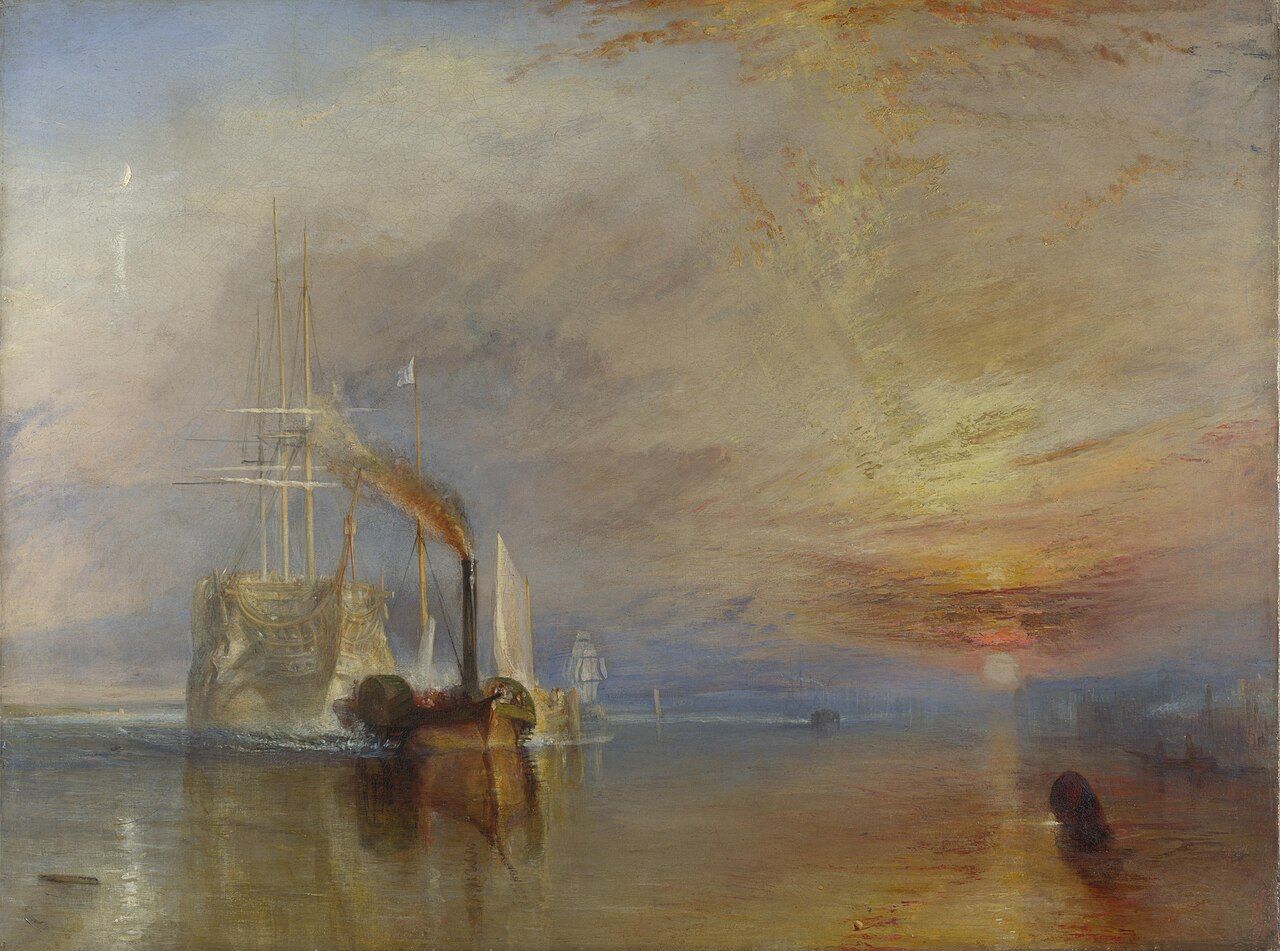
Parfit's best-known case starts on Earth. You enter the teletransporter and press a button. A scanner records the exact state of every cell in your brain and body, destroying them as it does so, and sends the information to Mars at the speed of light. There a replicator builds, from new matter, a brain and body exactly like yours. The person who steps out remembers your life up to the moment you pressed the button. He loves the people you love, holds your opinions and finishes the sentence you began. Have you travelled to Mars? Or have you died, and been replaced by someone who only thinks he is you?
Many people say they would travel this way without a second thought. Many others say they would never step into the booth. Now Parfit changes the case. In the Branch-Line Case, a new kind of scanner records you without destroying you. Your replica is made on Mars as before. But you are still on Earth, and the new scanner has damaged your heart: you will die within a few days. You can talk to your replica by video. He promises to look after your children and finish your book.
Here almost everyone feels that you, the person on Earth, are about to die, and that the person on Mars is someone else. Yet his relation to you is exactly what it was in the first case. Your fear in the booth was that this relation would not be enough, that something further would be left behind. The Branch-Line Case seems to confirm it.
Parfit draws the opposite conclusion. Being destroyed and replicated is about as good as ordinary survival. In the Branch-Line Case my relation to my replica is still about as good as survival, and the fact that I will also have a few more days on Earth hardly makes it worse. What we fear losing in the teletransporter, a further fact that carries us across, does not exist even in ordinary life.
The teletransporter
3. Divided minds
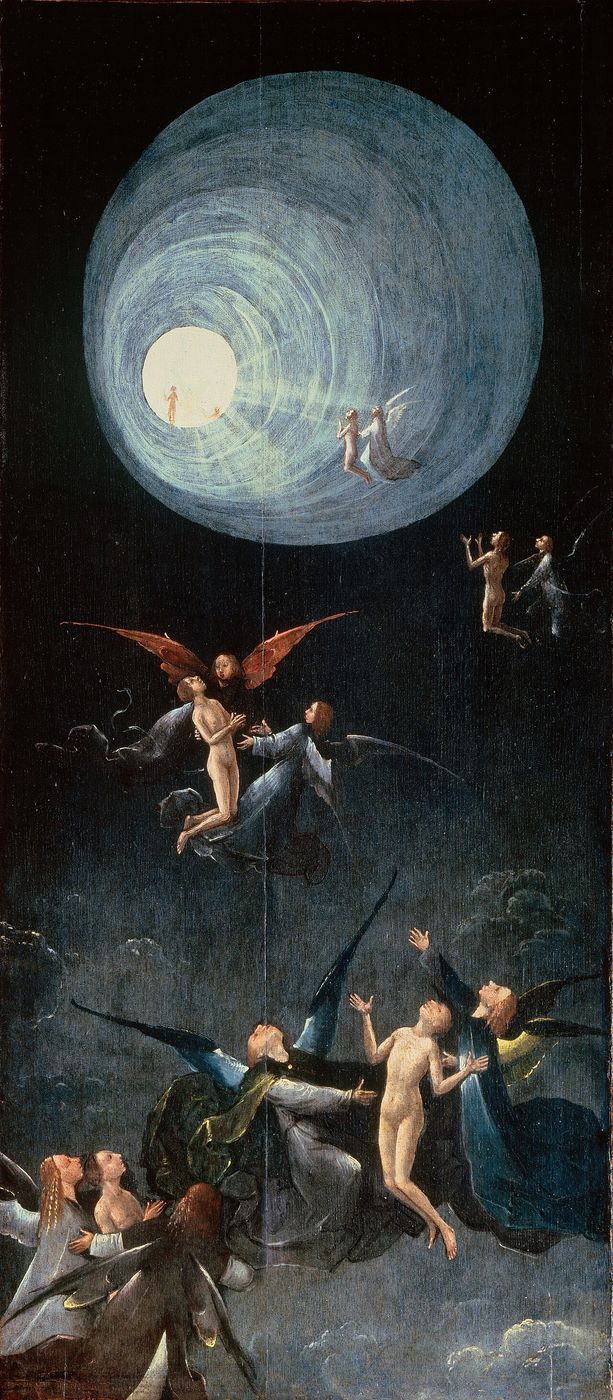
In the 1960s the neuroscientists Roger Sperry and Michael Gazzaniga studied patients whose brains had been divided by surgery, cutting the bundle of fibres between the two hemispheres to control severe epilepsy. In ordinary life the patients seemed unchanged. But in the laboratory, shown one thing on the left of the visual field and another on the right, each hemisphere could respond to what it saw while the other knew nothing of it. In some experiments there seemed to be two streams of consciousness in one head.
Parfit imagines a further step. Since each half of a brain can sustain a person's psychology, suppose that your brain is divided and each half is transplanted into a new body; Parfit uses the bodies of two brothers. Both operations succeed. Two people wake up, each with your memories, your character and your plans. What has happened to you?
- Not both. They are two people, who will soon lead different lives, and you were one.
- Not one rather than the other. Each stands in exactly the same relation to you, so nothing could make one of them you and the other not.
- Not neither. If one transplant had failed, you would have survived as the other, as people survive the loss of a hemisphere today. How could a double success be worse than a single one?
Each answer has a strong objection, and Parfit concludes that the question "which one is me?" may have no answer. Once we know what happened to each half of the brain, we know everything; the question is empty. And this, he argues, need not trouble us. My relation to each of the resulting people contains everything that matters in ordinary survival. Division is not as bad as death. It may be better than survival.
He adds a lighter case of his own: an exam in which he can divide his mind to try two ways of solving a problem at once, then reunite and choose the better answer. During the division there would be two streams of consciousness, each unaware of the other, and neither would be a separate person in any sense that matters.
My division
Press Divide, then say who survives.
4. The combined spectrum
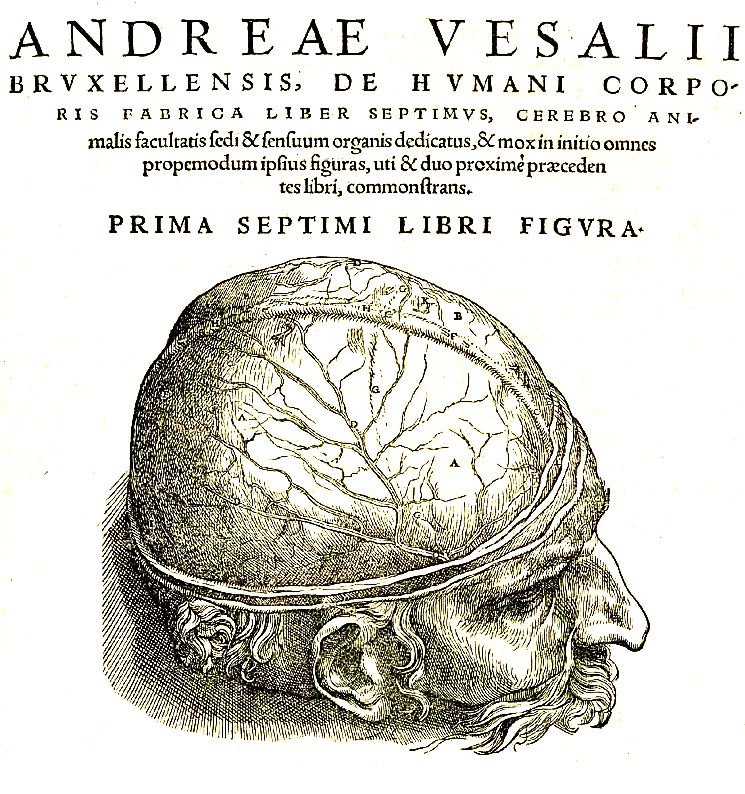
Imagine a range of possible operations. At the near end, nothing is done to you. At the far end, every cell in your brain and body is replaced with a new one, arranged so that you have the body, the memories and the character of someone else. Parfit chooses Greta Garbo at the age of thirty. In between lie the cases where only a few per cent of the cells and memories are changed, then a few more, all the way along.
At the near end the person who wakes is clearly you. At the far end she is clearly not. But nowhere along the spectrum is there a point at which it seems plausible that changing one more cell, or one more memory, makes the difference between your surviving and your being replaced by someone else. If personal identity were a further, all-or-nothing fact, there would have to be such a point, hidden from us but sharp.
Parfit's answer is that in the middle of the spectrum "is it still me?" is an empty question. Compare a club that stops meeting, then a few years later forms again under the same name, with some of the old members and the same rules. Is it the same club? We may have no answer, though we know everything that happened. Nothing is hidden. If we want an answer, we can decide on one, but the decision would not discover a fact.
The spectrum
Move the sliders, and mark the point where you think the person who wakes would no longer be you.
5. Relation R
If not a further fact, what does carry a person forward? Parfit's answer is psychological connectedness and continuity, which he calls Relation R.
- Connectedness is the holding of direct psychological links: a memory of an earlier experience, an intention formed yesterday and carried out today, a belief, desire or trait of character that persists.
- Continuity is the holding of overlapping chains of strong connectedness. You may remember nothing of your second birthday, but you are linked to it by a chain of days, each strongly connected to the next.
The distinction answers an old objection. Thomas Reid imagined a brave officer who was flogged at school as a boy, took an enemy standard in his first campaign, and became a general late in life. The young officer remembers the flogging; the general remembers taking the standard but has forgotten the flogging. On Locke's theory, which makes identity reach as far as memory, the general both is and is not the boy. Continuity removes the paradox: the chains overlap even where the direct links fail. Connectedness, meanwhile, comes in degrees, and Parfit thought it mattered too. He could say that he was less closely related to himself as a young man than to himself last week.
Two further claims complete the view. First, R need not have its normal cause. A replica produced by the teletransporter is R-related to you as fully as you will be to yourself tomorrow; what matters is the relation, not the continuity of a particular brain. Second, identity is simply R holding in one line, without branching. When R takes a branching form, as in division, identity fails, because one person cannot be two. But R itself does not fail.
Chains of memory
6. Identity is not what matters
Put the pieces together. In division, each resulting person is R-related to me exactly as I would be to myself after an ordinary night's sleep. Neither is me, because identity cannot take a branching form. But the only thing missing is the uniqueness of the relation, and that I have two successors rather than one cannot make my prospect worse. So, Parfit concludes, personal identity is not what matters in survival. What matters is Relation R, with any cause.
He draws consequences, and they are the part of the book that most readers remember.
- Self-interest loses its special authority. If my relation to my future self is a matter of degree, my concern for that self is not wholly different in kind from my concern for other people. The line between prudence and morality becomes less sharp, and imprudence becomes a little like wronging someone else.
- Death becomes less bad. After my death there will be no one living who is R-related to me as I am now to myself tomorrow. But many experiences will be related to mine in weaker ways: through memories of me, through the influence of my thoughts, through work I left behind. My death breaks only some of the relations that make up a life.
- The view changed how he felt. Parfit wrote that while he believed in a further fact, his life seemed like a glass tunnel through which he was moving faster every year, with darkness at the end. When he changed his view, "the walls of my glass tunnel disappeared". Afterwards he cared less about the rest of his own life and more about the lives of others.
The view has met strong objections, and each has its own page. Bernard Williams argued that told one way, a body-swap case seems to carry you with your memories, but told another, you should fear a torture inflicted on your body whatever memories you then have. Christine Korsgaard argued that the unity of a person is made by agency, not found by metaphysics. And the animalists, Eric Olson above all, hold that we are human animals, whose persistence has nothing to do with psychology. David Lewis accepted Parfit's account of what matters and denied that identity came apart from it.
7. From thought experiment to physics
Parfit's cases are imaginary. Nobody has built a teletransporter or transplanted half a brain, and critics have asked what we can learn from intuitions about events that never happen. Parfit's reply was that imagined cases test our concepts. If our idea of a person yields no answer, or contradictory answers, when a case is pushed far enough, we have learned something about the idea: that it rests on assumptions that are usually true, and need not be.
Physics offers a sharper reply. On Hugh Everett's theory of quantum mechanics, as the reality site sets it out, the world does not collapse to one outcome when a quantum event is measured. Every outcome happens, and each of us comes to exist in many versions, each seeing a different result. Fission is then not a remote possibility for a future surgeon. It is the ordinary condition of every person who has ever lived. Parfit wrote almost nothing about quantum mechanics, and the next page does not attribute its conclusions to him. But it argues that his view is the one that makes sense of that world.
In short
- There is no further fact about personal identity, no soul or ego over and above a brain, a body and a stream of interrelated events.
- The teletransporter and the Branch-Line Case show that we fear losing something that does not exist even in ordinary survival.
- Division shows that "which one is me?" can be an empty question, and that what matters survives in both.
- The combined spectrum shows that identity can be indeterminate, with no sharp line between survival and replacement.
- What carries a person forward is Relation R: psychological connectedness and continuity, with any cause.
- Identity is R without branching, and it is not what matters. R is.