Everett, Lewis, Saunders and Wallace, Deutsch
Many of you
If Everett was right, you are dividing all the time, and Parfit's thought experiments describe your ordinary life. This page asks what then becomes of you.
The Parfit page ends with the observation that his cases are imaginary. This page takes them into the multiverse of quantum physics, where fission is not a surgeon's fantasy. It is not a Parfit page: he wrote almost nothing about quantum mechanics, and nothing here is attributed to him that he did not say. Each section names its source. The last section is the site's own conclusion and is labelled as such. Five figures respond to you.
1. Fission made real
In 1957 Hugh Everett proposed that quantum mechanics be taken at its word. The equation that governs the quantum state never says that a measurement has one outcome. It says that the measuring device, and the physicist reading it, come to exist in several versions, each recording a different result. Textbooks add a rule of collapse to remove the versions that were not seen. Everett dropped the rule. The reality site sets out the case for his theory and the objections to it; here we take it as given.
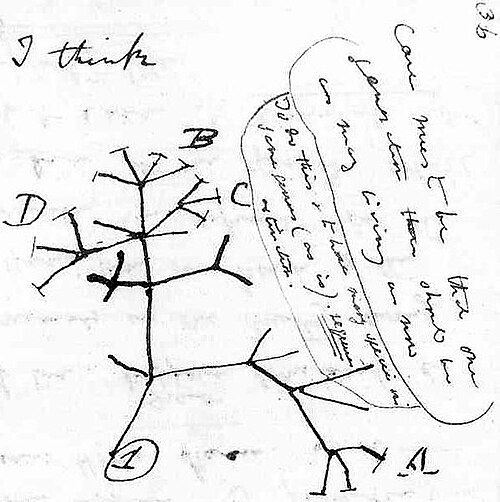
David Deutsch, the theory's most forceful advocate, adds a refinement that matters for identity. Most of the time the instances of you in the multiverse are fungible: identical in every respect, and not separate things in any meaningful sense, as pounds in a bank account are not separate coins. When the outcome of a quantum event is recorded and amplified, as happens constantly in nature, the instances become different from one another. So fission in the multiverse is not one person splitting into two, as in Parfit's case. It is a great many identical instances differentiating into groups, again and again, in proportions given by the quantum state.
Every thread in the bundle has one past and many futures. That is exactly the shape of Parfit's division, repeated without end.
Branching selves
Sixty-four fungible instances of you, identical in every respect.
2. Two from the start
David Lewis, in "Survival and Identity" (1976), agreed with Parfit about what matters in survival: psychological continuity and connectedness. But he denied that it ever comes apart from identity. His account rests on a view of persons as things extended in time, made of temporal parts or stages, much as a road is made of stretches of tarmac.
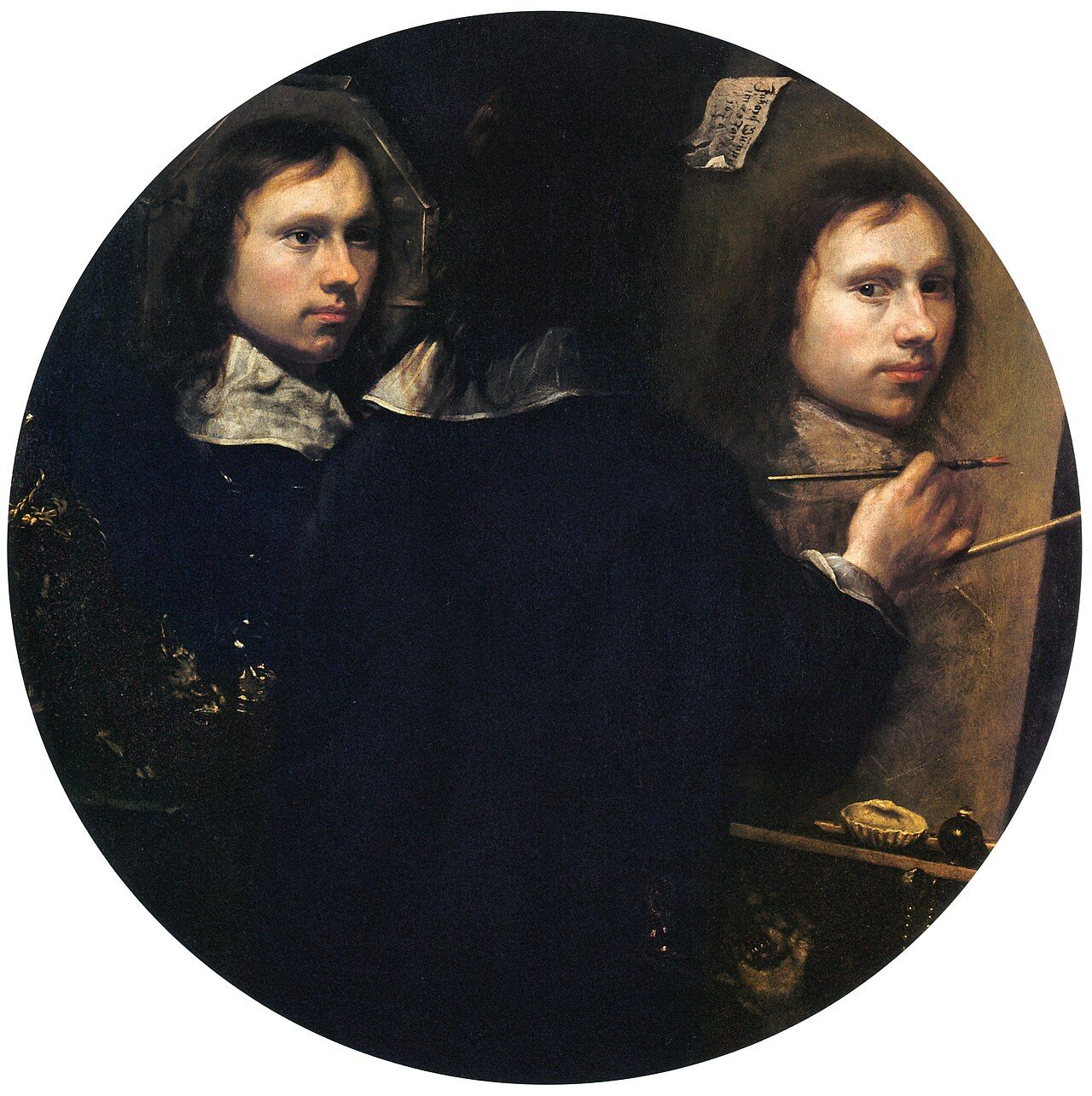
On that view, a fission case contains two persons all along. Before the division they share their stages, as two roads can share a stretch of tarmac before they part at a fork. Ask "how many people are in the room?" before the operation, and the honest answer is: one, if you count by stages, and two, if you count by persons. Ordinarily the two ways of counting agree, which is why we never notice the difference. In fission they come apart, and then each person who wakes up afterwards is identical to a person who was there before. Nothing that matters is lost, and identity is preserved.
Shared stages
3. Which branch will I see?
If every outcome happens, what is there to be uncertain about? On a simple reading of Everett, nothing. Before a measurement you know exactly what will happen: you will see both outcomes, each in its own branch. But then it is hard to see what quantum probabilities mean, since the theory predicts them with great precision and experiments confirm them.
Simon Saunders and David Wallace, in "Branching and Uncertainty" (2008), used Lewis's account to answer differently. If the persons who will see different outcomes are already present before the branching, each sharing your present stage, then each of them can sensibly wonder which future is his own. Uncertainty is real, and probability has something to be about: not which outcome will happen, since all will, but which of them you will find yourself in.
Hilary Greaves defended the opposite reading. A branching agent faces no uncertainty, she argued, but should still care about each future branch in proportion to its quantum weight, as a parent might care about each of several children. Either reading lets the theory make sense of betting and planning. The reality site's Wallace page sets out the decision-theoretic case, begun by Deutsch in 1999, for why the weights should guide what we do.
The bet
Place a bet.
Place a bet.

4. Quantum immortality
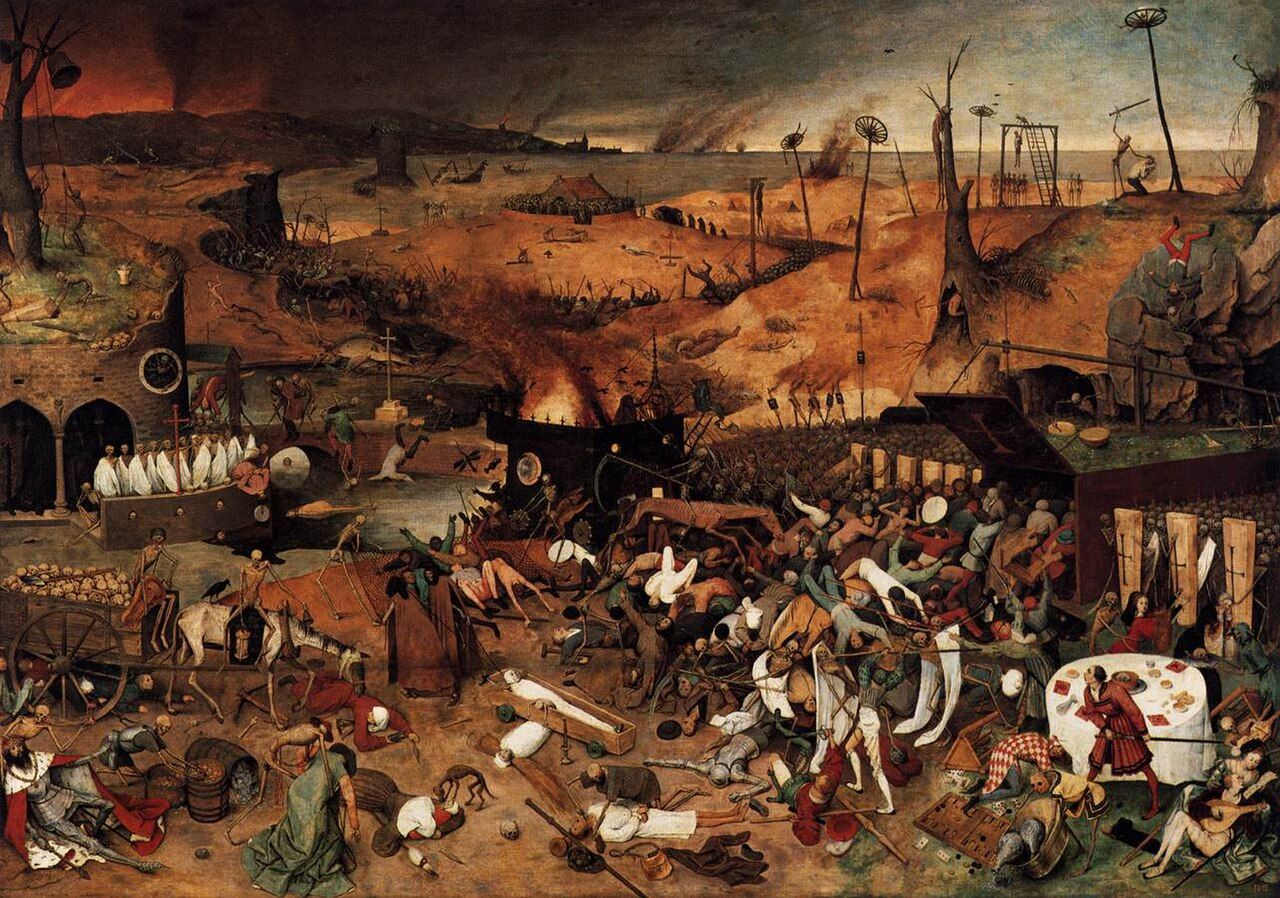
Max Tegmark described a darker experiment in the late 1990s. A gun is wired to a quantum measurement, so that each time the trigger is pulled it either fires or clicks, with equal weight. The experimenter sits in front of it. In every round there is a branch in which he survives. If surviving in some branch is all that matters to him, he should expect to hear nothing but clicks, however long he goes on. Tegmark does not recommend the experiment, and he doubts the conclusion: most real deaths are gradual, through stages of diminished consciousness, not sudden and binary like a bullet.
David Lewis, in "How Many Lives Has Schrödinger's Cat?" (2004), published after his death, took the threat more seriously. An Everettian who measures survival as he does, he argued, should expect to go on living in branches where improbable escapes keep happening. Those branches are seldom kind; the survivor of a thousand near misses is not usually well. He found the prospect more frightening than consoling.
Parfit's view changes the question. If identity is not what matters, "will I survive somewhere?" is the wrong thing to ask. The question is how much of what matters there will be, and where: in how many branches, of what weight, and with what lives in them. On that reckoning quantum roulette is a disaster. Each round halves the measure of the branches in which the experimenter's life goes on. That is the site's reading, not Parfit's.
Quantum roulette
Round 0. The experimenter waits.
5. What is a person?
Parfit asked what keeps a person the same over time. He said less about what a person is, and here the site turns to Deutsch, whose answer is distinctive. In The Beginning of Infinity (2011), Deutsch argues that a person is a universal explainer: an entity that can create any explanation there is, by conjecture and criticism. Humans are the only known examples. The difference between us and other animals is not one of degree but a jump to universality, like the jump from special-purpose calculating machines to the universal computer, which can be programmed to compute anything computable.
Two consequences follow, on his account. Because the laws of physics allow any physical process to be simulated by a universal computer, a program that is a person must be possible: artificial general intelligence is achievable in principle, and will come when we understand creativity well enough to write it. And such a program would be a person, with everything that implies for how it should be treated. What makes something a person is what it can do, not what it is made of.
Nothing in this depends on what makes a person the same over time, and Deutsch offers no theory of personal identity to set beside Parfit's. The two answers address different questions and fit together: Deutsch says what kind of thing a person is, Parfit what carries one forward. A universal explainer whose explanations, memories and plans continue is, by Parfit's measure, as good as surviving, whether it continues in the same brain, in a new one on Mars or in many branches at once.
Who counts?
6. Parfit in the multiverse
This section is the site's own conclusion, drawn from putting the views above together. Neither Parfit nor Deutsch is committed to it.
If Parfit is right, the multiverse takes nothing that matters away from us. Each of your successors in each branch is R-related to you as fully as you are to yourself tomorrow in a single world. There is no further fact about which of them you will be, and nothing is lost because there is no such fact. The weight of each branch tells you how much of what matters lies there, and so how much to care about it.
If Lewis, Saunders and Wallace are right, you already share your present with many persons whose futures differ, and your uncertainty about which future is yours is what quantum probability is about. Identity survives, at the price of more persons than we thought.
Either way the threat the multiverse poses to personal identity is the threat of the teletransporter and of division, and Parfit's answer to those is an answer to it. And Deutsch's account of what a person is tells us what is carried forward in every branch: not a soul, not a particular lump of matter, but a creator of explanations, continuing.