Oxford, London and Oates, 1632–1704
John Locke
In 1694 Locke added a chapter to his Essay that started the modern debate. A person, he said, is not a soul or a body but a consciousness that can look back on its own past.
The view
Locke's chapter "Of Identity and Diversity", added to the second edition of An Essay Concerning Human Understanding in 1694, begins by noticing that "same" means different things for different kinds of thing. The same mass of matter is the same particles. The same oak or horse is the same organised life, which goes on while its particles change. The same man, a human being, is the same living body. And the same person is something else again.
A person, in his definition, is a thinking intelligent being that has reason and reflection, and can consider itself as itself, the same thinking thing, in different times and places. What makes it the same person is consciousness: "as far as this consciousness can be extended backwards to any past action or thought, so far reaches the identity of that person". The substance that thinks, whether soul or matter, does not settle the matter. If the same consciousness were carried by a different substance, the person would be the same; if one substance carried two consciousnesses that knew nothing of each other, there would be two persons.
"Person", Locke added, is a forensic term. It picks out what can be held responsible, rewarded and punished, and concerned for its own happiness. Justice requires that the one punished be the one who remembers the crime as his own.
The argument
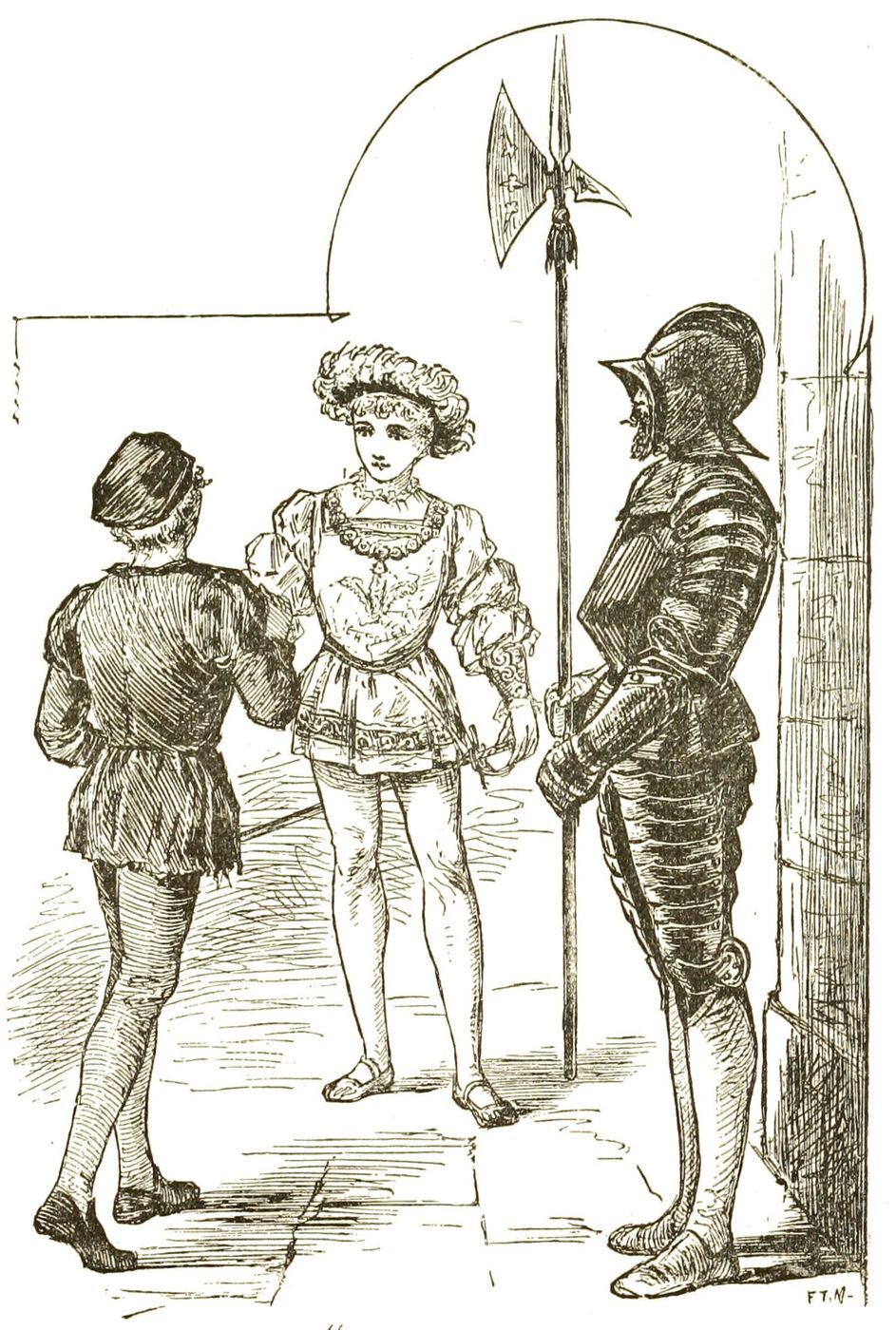
Locke argued by cases. Suppose the soul of a prince, carrying the consciousness of his past life, entered and informed the body of a cobbler as soon as the cobbler's own soul had left it. Everyone, he said, would see that the cobbler's body now housed the prince: the same person as the prince, though the same man as the cobbler. And if a man in the day and a man at night shared one body but never shared a thought, the day-man and the night-man would be two persons.
The prince and the cobbler, each in his own body.
Where he meets Parfit
Parfit's view grows from Locke's. Both make psychological relations, not a soul or a body, what carries a person forward. Locke's prince and cobbler is the first body-swap case, and his day-man and night-man anticipate divided minds. Locke even allowed that one consciousness might pass between substances without loss, which is the teletransporter in outline.
Where he parts from Parfit
Locke relied on direct memory, and two objections followed within a century. Butler argued that memory presupposes identity and cannot constitute it. Reid's brave officer showed that memory is not transitive: the general remembers the young officer, who remembers the flogged boy, yet the general has forgotten the flogging. Parfit answers both by replacing memory with continuity, overlapping chains of links of many kinds, and by allowing for quasi-memory. And Locke never doubted that identity is what matters. For him it is the ground of justice and of all concern for the future. Parfit's account of what matters is built from Locke's materials and turned against his conclusion.
| Locke | Parfit | |
|---|---|---|
| What is a person? | "A thinking intelligent being, that has reason and reflection, and can consider itself as itself" over time. A forensic term. | Nothing over and above a brain, a body and a series of interrelated physical and mental events. |
| What makes you the same person over time? | Sameness of consciousness: you are the person whose past actions and experiences you can remember as your own. | Relation R, psychological connectedness and continuity, holding in one line without branching. |
| Is identity what matters? | Yes. Reward, punishment and concern for the future all follow personal identity. | No. What matters is Relation R, which can hold without identity, as in division. |
| One of you, or many? | One. Two consciousnesses in one man would make two persons; one consciousness across two substances, one person. | Normally one, but the concept fails when R branches; then the question may be empty. |
Further reading
- John Locke, An Essay Concerning Human Understanding (2nd edn, 1694), book II, chapter xxvii.
- John Perry (ed.), Personal Identity (1975; 2nd edn 2008), which reprints Locke, Butler, Reid and Hume with modern papers.
- Galen Strawson, Locke on Personal Identity (2011).
- Locke's theory of knowledge has a page on the knowledge site.