Oxford, born 1934
Richard Swinburne
If your brain is divided and both halves live, which one will be you? Richard Swinburne holds that there is always an answer, even if nobody could ever know it, because a person is a soul.
The view
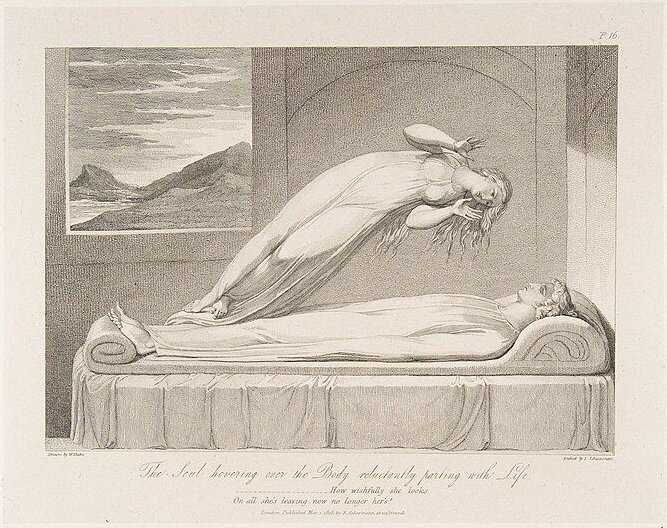
Richard Swinburne, for many years Nolloth Professor of the Philosophy of the Christian Religion at Oxford, is the leading modern defender of what Parfit called the further-fact view and what Swinburne calls the simple view. In Personal Identity (1984), a debate with Sydney Shoemaker, and in The Evolution of the Soul (1986), he argues that a person consists of a soul and a body, that the soul is the essential part, and that personal identity is the identity of the soul.
Because a soul is simple, its identity is not a matter of degree and cannot be indeterminate. Memory, character and bodily continuity are evidence of who a future person is, often very good evidence. But they are not what identity consists in, and in the hard cases the evidence may run out while the fact remains.
The argument
Swinburne's main argument starts from what is conceivable. It is coherent to suppose that I might survive the destruction of my body, or wake in a different one; it is coherent to suppose that in a divided brain I go with the left half rather than the right, though the two halves are equally continuous with me. If these suppositions are coherent, then my identity cannot consist in physical or psychological continuity, which are the same in both versions. There must be something more, and he calls it a soul.
Your brain will be divided tomorrow. Place your bet.
Where he meets Parfit
Swinburne and Parfit agree on more than either side might expect. Both reject the middle positions, bodily or psychological criteria that treat identity as a deep fact while denying a soul. Both think the puzzle cases force a choice between a further fact and Reductionism. And both take the cases seriously as tests of what we believe.
Where he parts from Parfit
On everything else. The simple view is the strongest modern form of the view Parfit set out to refute. Parfit argued that there is no evidence for Cartesian souls, that the conceivability of a soul-swap tells us nothing about whether souls exist, and that if there were such things, their identity could not be what matters, since a soul could carry none of my memories or character. Swinburne replies that the soul is what my memories and character belong to, and that only the simple view explains why the question "will that be me?" seems to demand a yes or a no.
| Swinburne | Parfit | |
|---|---|---|
| What is a person? | A pure mental substance, a soul, joined to a body during this life; the soul is the essential part. | Nothing over and above a brain, a body and a series of interrelated physical and mental events. |
| What makes you the same person over time? | Nothing that can be analysed: identity is an ultimate, further fact, which memory and bodily continuity are only evidence for. | Relation R, psychological connectedness and continuity, holding in one line without branching. |
| Is identity what matters? | Yes. Whether a future person will be me is the most important fact about my future, and it is always determinate. | No. What matters is Relation R, which can hold without identity, as in division. |
| One of you, or many? | One. A soul cannot divide; after fission at most one successor is the original. | Normally one, but the concept fails when R branches; then the question may be empty. |
Further reading
- Sydney Shoemaker and Richard Swinburne, Personal Identity (1984).
- Richard Swinburne, The Evolution of the Soul (1986; revised 1997).
- Richard Swinburne, Are We Bodies or Souls? (2019), a short, readable statement of the case.