Cornell, 1931–2022
Sydney Shoemaker
Brown's brain is put into Robinson's head. The man who wakes has Robinson's face and Brown's memories, and he says he is Brown. Sydney Shoemaker thought he was right.
The view
In Self-Knowledge and Self-Identity (1963), Sydney Shoemaker described a surgical accident. Two men, Brown and Robinson, have their brains removed for an operation, and Brown's brain is put back into Robinson's head. The man who recovers, whom Shoemaker called Brownson, has Robinson's body and Brown's brain. He remembers Brown's life, has Brown's character, recognises Brown's wife and is horrified by the face in the mirror. Most people, asked who he is, say Brown.
The case moved the debate. If persons can go where their brains go, identity follows psychology rather than the body as a whole. Shoemaker went on to give the psychological view a functionalist form: mental states are defined by their causal roles, and personal identity consists in the right kind of causal continuity of such states.
The argument
Butler had objected that memory presupposes identity, so it cannot make it. Shoemaker's answer, in "Persons and Their Pasts" (1970), was quasi-memory. To quasi-remember an experience is to have an apparent memory of it that is caused, in the right way, by that experience, whoever had it. Ordinary memories are quasi-memories of one's own experiences. But the definition does not mention identity, so a theory built on quasi-memory is not circular. And if quasi-memories could be transferred, we might remember from the inside experiences that someone else had.
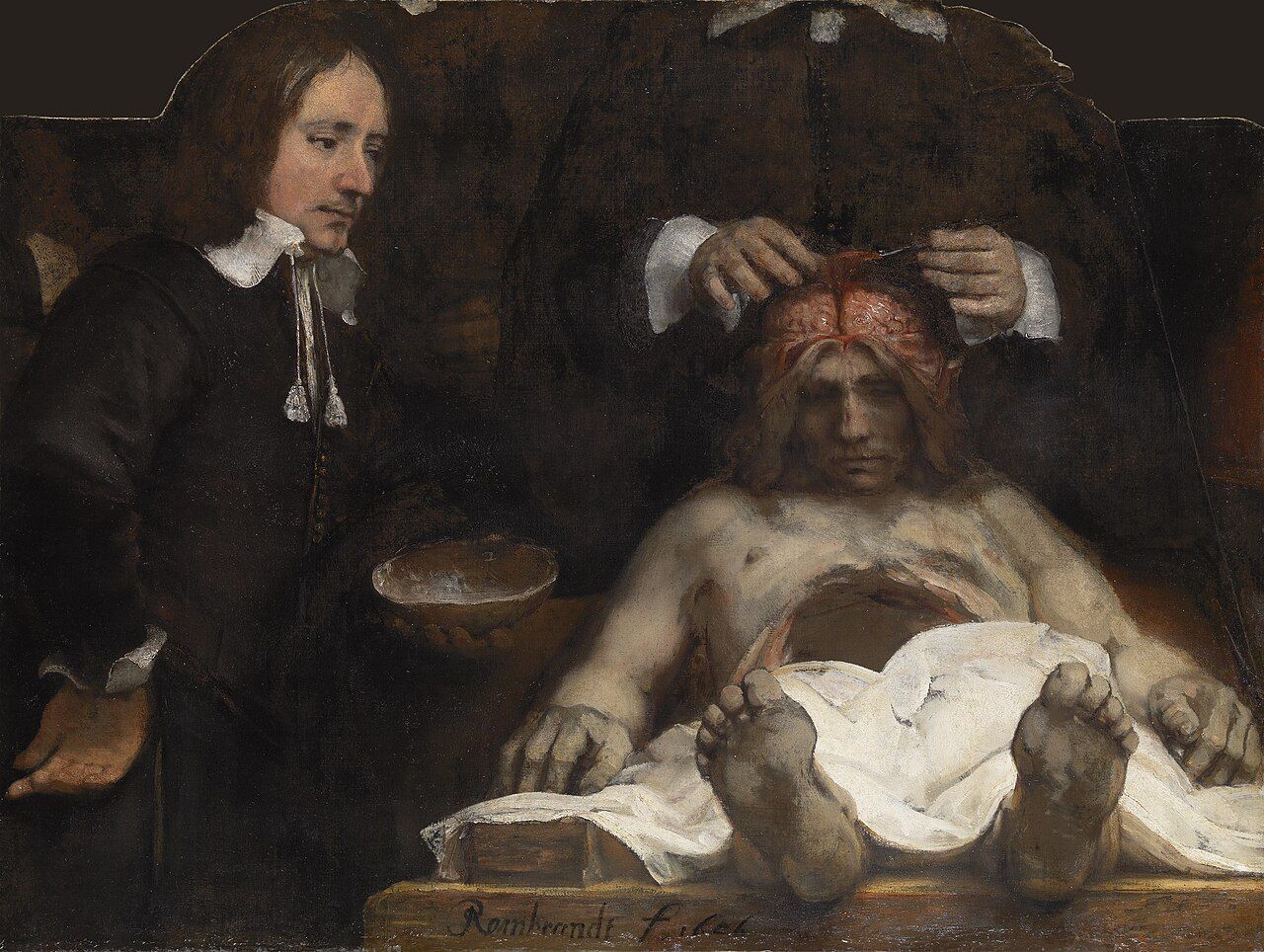
Brown and Robinson, before the operation.
Where he meets Parfit
Shoemaker supplied two of the tools Parfit used. Brownson shows that persons follow psychological continuity. Quasi-memory answers Butler, and lets Parfit say that the replica's memories of your life are as good as your own. In Personal Identity (1984), the book of debate he wrote with Richard Swinburne, Shoemaker defended a psychological view very close to Parfit's against Swinburne's soul.
Where he parts from Parfit
Very little. Shoemaker kept a requirement that the continuity have the right kind of cause, where Parfit allowed any cause, and he was more inclined to think that the concept of a person is worth keeping in its ordinary place. But he accepted that fission would preserve what matters without preserving identity. His was the view Parfit built on, not one he argued against.
| Shoemaker | Parfit | |
|---|---|---|
| What is a person? | A subject of psychological states, which are defined by what they do; persons are realised in brains but not identical with them. | Nothing over and above a brain, a body and a series of interrelated physical and mental events. |
| What makes you the same person over time? | Psychological continuity with the right kind of cause, holding in one line, without branching. | Relation R, psychological connectedness and continuity, holding in one line without branching. |
| Is identity what matters? | Mostly. Shoemaker accepted that fission would preserve what matters, though not identity. | No. What matters is Relation R, which can hold without identity, as in division. |
| One of you, or many? | One, except in fission, where neither successor is the original but both have what matters. | Normally one, but the concept fails when R branches; then the question may be empty. |
Further reading
- Sydney Shoemaker, Self-Knowledge and Self-Identity (1963).
- Sydney Shoemaker, "Persons and Their Pasts", American Philosophical Quarterly (1970).
- Sydney Shoemaker and Richard Swinburne, Personal Identity (1984).