Leipzig, Paris and Hanover, 1646–1716
Gottfried Wilhelm Leibniz
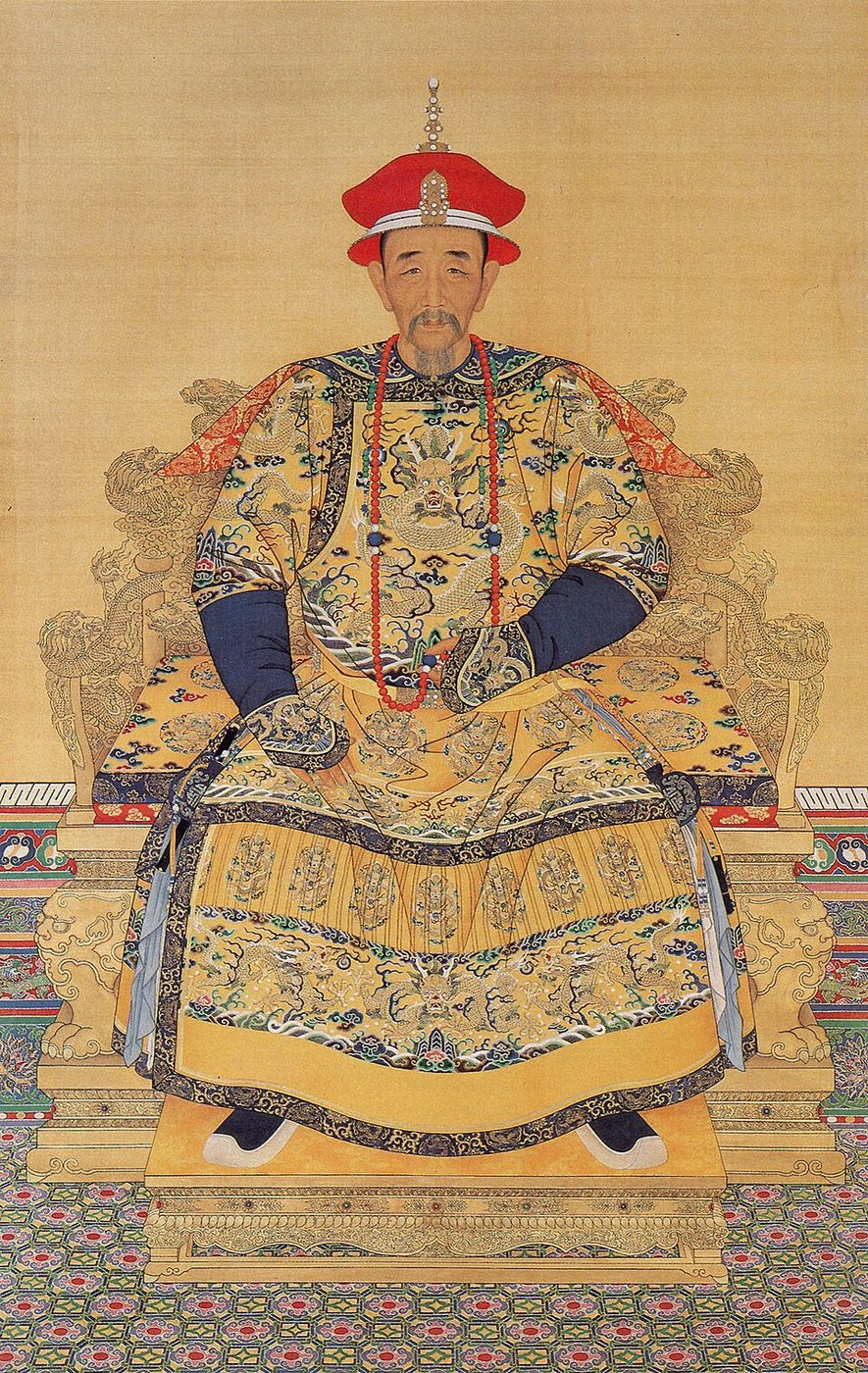
Would you accept an offer to become the King of China, if the price were forgetting everything you had been? Leibniz thought nobody would, because it would be no better than being destroyed.
The view
For Leibniz the world is made of simple substances, which he later called monads. A monad has no parts, so it cannot come apart; it can begin only by creation and end only by annihilation. Every soul is a monad, and so the persistence of a person through time is guaranteed by the persistence of an indivisible thing. There can be no half-survival and no fission.
But Leibniz did not think the substance was all that mattered. In the Discourse on Metaphysics (1686), section 34, he imagined someone offered the chance to become the King of China at once, on condition that he forget what he had been, as though born again. In our rendering of his question: is that not, in practice, the same as if he were annihilated, and a King of China created in his place at the same instant? Nobody, Leibniz says, has reason to want it. What makes a future worth wanting for me is that I will remember, and know myself.
The argument
Leibniz answered Locke directly in the New Essays on Human Understanding, written around 1704 and published only in 1765. He accepted that consciousness and memory make a moral person, the bearer of reward and punishment. But he denied that they could come apart from the real identity of the substance. God, he held, would not allow a soul's memory to be transferred to another, or lost completely; the order of the world keeps moral identity and real identity together.
Where he meets Parfit
The King of China case is a test of what matters, and Leibniz answers it as Parfit would. Continuity of substance without continuity of memory and character is worth nothing to me; it is as bad as ceasing to exist. That is the core of Parfit's claim that Relation R, not the persistence of a particular thing, is what we care about.
Where he parts from Parfit
Leibniz kept the further fact. For him, whether a future person is me is always settled by whether he is the same monad, and the question can never be empty or indeterminate. Parfit's puzzle cases, division above all, are impossible in his world, because a simple substance cannot divide. He also trusted God to keep memory and substance together; Parfit had no such guarantee, and needed none.
| Leibniz | Parfit | |
|---|---|---|
| What is a person? | A simple, indivisible substance, a monad, with memory and self-knowledge that make it a moral person. | Nothing over and above a brain, a body and a series of interrelated physical and mental events. |
| What makes you the same person over time? | The persistence of the same monad; personal identity also needs the memory and consciousness by which it knows itself. | Relation R, psychological connectedness and continuity, holding in one line without branching. |
| Is identity what matters? | Partly. Memory and consciousness are what make survival worth wanting, but the substance is what guarantees it. | No. What matters is Relation R, which can hold without identity, as in division. |
| One of you, or many? | One. A monad cannot divide, so fission and duplication of a person are impossible. | Normally one, but the concept fails when R branches; then the question may be empty. |