Durham, 1692–1752; Aberdeen and Glasgow, 1710–1796
Joseph Butler and Thomas Reid
A bishop and a professor answered Locke within a century. Memory, they said, is evidence that you are the same person, not what makes you so. Identity itself is simple, indivisible and never a matter of degree.
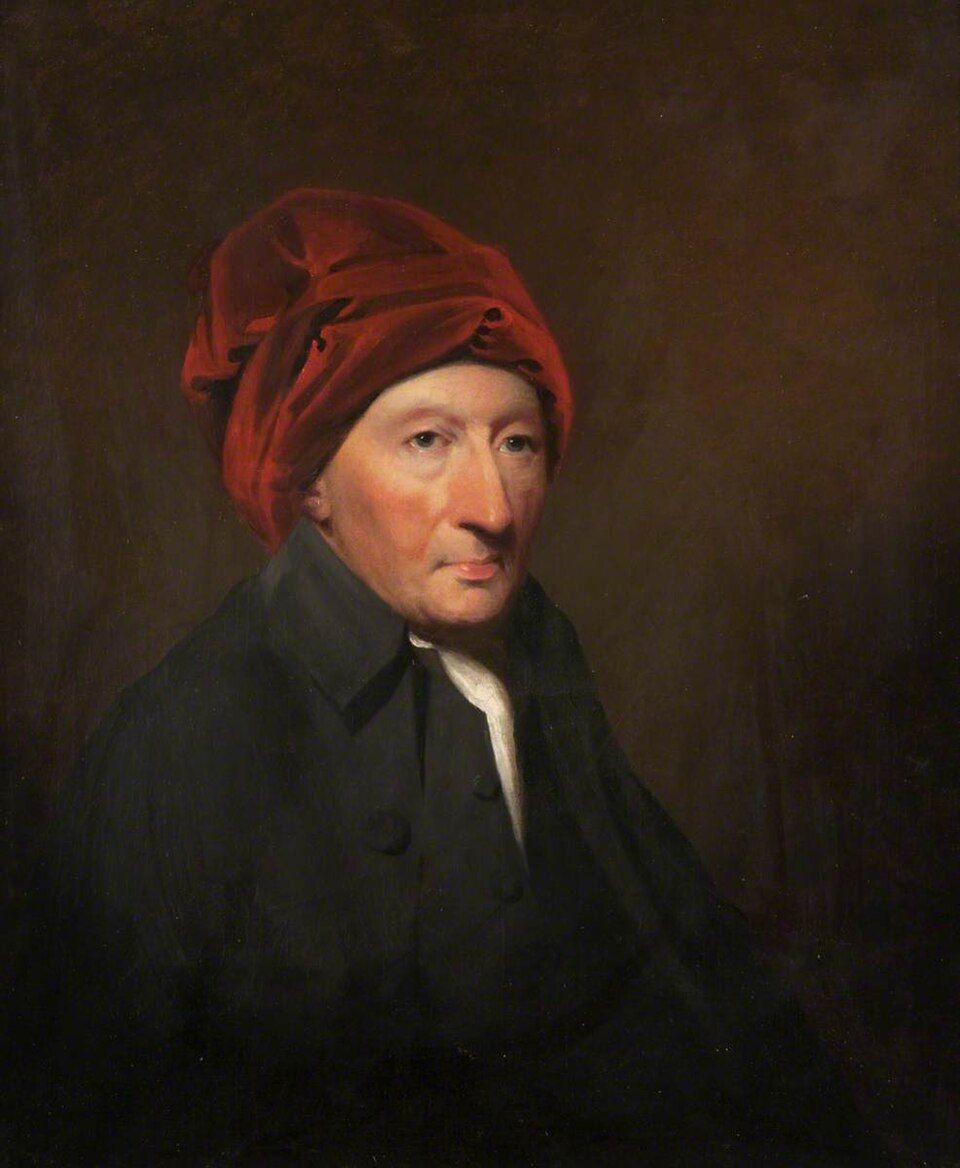
The view
Joseph Butler, later Bishop of Durham, appended a short dissertation "Of Personal Identity" to The Analogy of Religion (1736). Its central sentence is still quoted: consciousness of personal identity "presupposes, and therefore cannot constitute, personal identity". To remember an experience as mine is already to take it that I had it. Memory cannot be what makes me the person who had it, any more than knowledge can make the truths it knows.
Butler distinguished two senses of "same". In a loose and popular sense we call a tree the same though all its matter has changed. In the strict and philosophical sense that applies to persons, identity is all or nothing, and it does not depend on the continuity of anything else.
Thomas Reid developed the case in his Essays on the Intellectual Powers of Man (1785). I am not my thoughts, actions or feelings, he wrote; "I am something that thinks, and acts, and suffers." My thoughts change every moment, but the self to which they belong is permanent and has no parts. Its identity is perfect, and it admits of no degrees.
The argument
Reid's most famous argument is aimed at Locke. A brave officer was flogged at school as a boy for robbing an orchard. In his first campaign he took a standard from the enemy, and late in life he was made a general. Suppose that when he took the standard he remembered the flogging, and that as a general he remembered taking the standard but had entirely forgotten the flogging. On Locke's theory the young officer is the boy, and the general is the young officer. Identity is transitive, so the general is the boy. But the general cannot remember the flogging, so on Locke's theory he is not the boy. The theory contradicts itself.
Where they meet Parfit
Butler and Reid took the puzzle cases seriously and saw what was at stake: whether our concern for our own futures, and our practices of praise and blame, rest on something real. Parfit respected the objections. He answered Reid with continuity, overlapping chains rather than direct memory, and Butler with quasi-memory, a notion of remembering that does not presuppose identity, taken from Shoemaker.
Where they part from Parfit
They hold exactly the view Parfit set out to refute: identity as a further fact, simple and all-or-nothing, which always has a determinate answer. On their view the combined spectrum must contain a sharp line, and division must leave you in one body, or the other, or neither, as a matter of fact. Parfit's claim that such questions can be empty would have struck Reid as a confusion between a thing and the evidence for it.
| Butler and Reid | Parfit | |
|---|---|---|
| What is a person? | A simple, indivisible thinking being, "something that thinks, and acts, and suffers", not its thoughts or acts. | Nothing over and above a brain, a body and a series of interrelated physical and mental events. |
| What makes you the same person over time? | Nothing further can be said: identity is simple and undefinable. Memory is evidence of it, never its ground. | Relation R, psychological connectedness and continuity, holding in one line without branching. |
| Is identity what matters? | Yes. Without strict identity, responsibility and concern for the future would make no sense. | No. What matters is Relation R, which can hold without identity, as in division. |
| One of you, or many? | One. A person cannot be divided, and identity admits of no degrees. | Normally one, but the concept fails when R branches; then the question may be empty. |
Further reading
- Joseph Butler, "Of Personal Identity", dissertation I appended to The Analogy of Religion (1736).
- Thomas Reid, Essays on the Intellectual Powers of Man (1785), essay III, chapters 4 and 6.
- John Perry (ed.), Personal Identity (2nd edn, 2008), which reprints both.