Edinburgh and La Flèche, 1711–1776
David Hume
Hume looked inward for the self that is supposed to have his experiences, and found only the experiences. A person, he concluded, is a bundle of perceptions, and the identity we ascribe to it is a fiction.
The view
In A Treatise of Human Nature (1739), book 1, part 4, section 6, Hume tests the claim of some philosophers that we are always intimately conscious of a self, continuing and simple. When he enters most intimately into what he calls himself, he says, he always stumbles on some particular perception or other: of heat or cold, light or shade, love or hatred, pain or pleasure. He never catches himself without a perception, and never observes anything but the perception. A person is nothing but a bundle or collection of different perceptions, which succeed each other with an inconceivable rapidity and are in perpetual flux.
Why then do we believe in a single, lasting self? Because the mind passes so smoothly along a series of related perceptions, linked by resemblance and causation, that it confuses the series with an unchanging object. Identity through time is a fiction we feign, as we do for plants, animals and ships that change their parts.
The argument
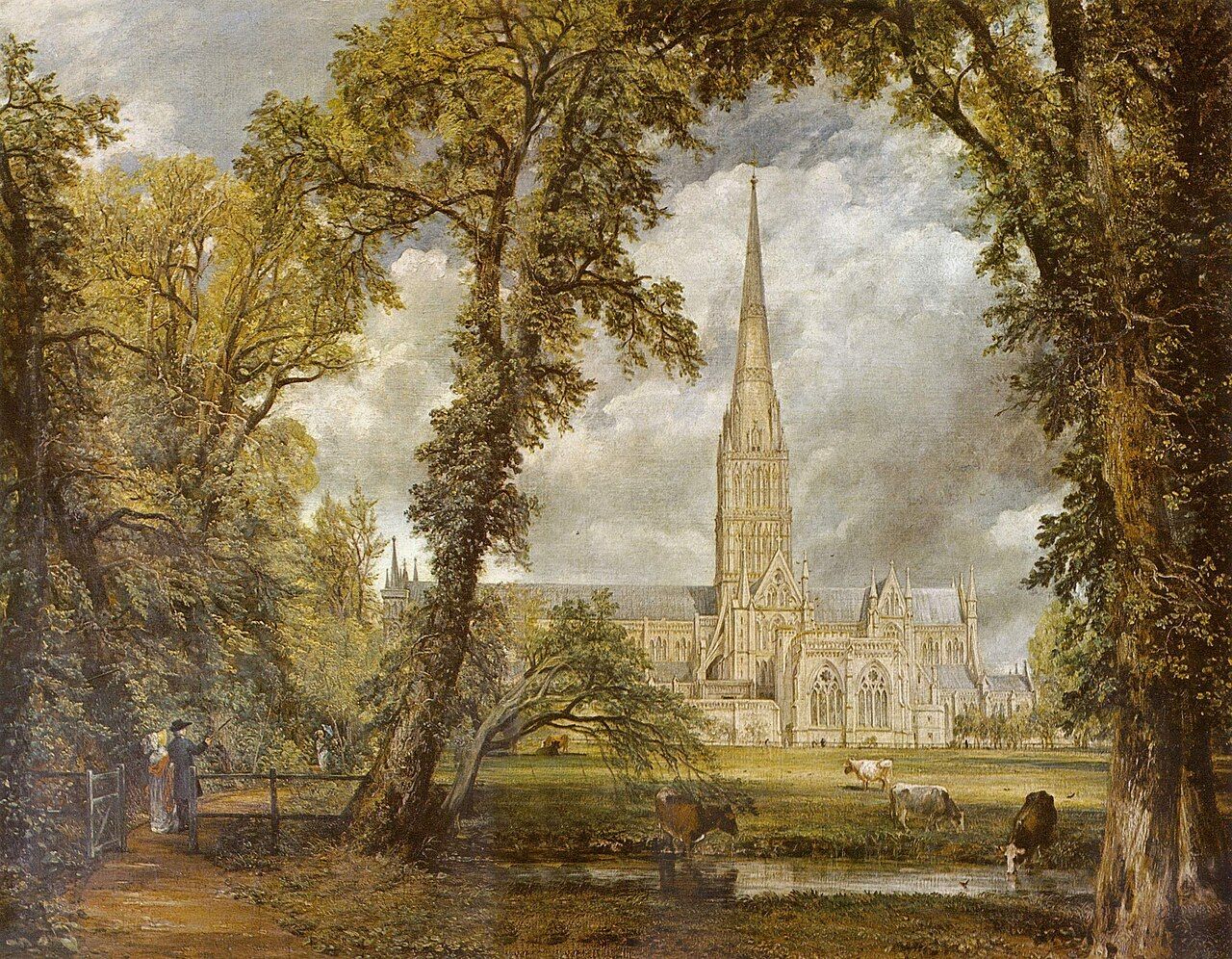
Hume's examples are objects. A church that was once of brick falls to ruin, and the parish rebuilds it of freestone, in a modern style. Neither the form nor the material is the same; only their relation to the parish connects them. Yet we call it the same church without hesitation. A ship repaired over years is still the same ship. And all disputes about the identity of connected objects, he wrote, are merely verbal, except in so far as the relation of parts gives rise to some fiction.
He also compared the soul to a republic or commonwealth, whose members change while laws and constitution carry it on, and which can change its laws too and still be the same commonwealth.
The parish church, built of brick.
Where he meets Parfit
Hume is the first great reductionist in the Western tradition, and Parfit acknowledged him. Both deny that there is a self over and above experiences and their relations; both think identity questions can be empty, settled by a decision about words once the facts are in. Hume's church and commonwealth are Parfit's club, two centuries early.
Where he parts from Parfit
Hume calls identity a fiction, a mistake the imagination makes. Parfit thinks persons are real and identity is a genuine relation; it is simply not a deep one, and not what matters. Parfit also gives a positive account, Relation R, of what carries us forward, where Hume describes only how the belief in identity arises. And Hume was not satisfied. In the Appendix to the Treatise he confessed that on reviewing the section he found himself in a labyrinth: he could neither correct his former opinions nor make them consistent. What troubled him is still disputed.
| Hume | Parfit | |
|---|---|---|
| What is a person? | A bundle or collection of perceptions, succeeding one another and linked by resemblance and causation. | Nothing over and above a brain, a body and a series of interrelated physical and mental events. |
| What makes you the same person over time? | Nothing strictly. We feign an identity to smooth over a chain of resembling, causally related perceptions. | Relation R, psychological connectedness and continuity, holding in one line without branching. |
| Is identity what matters? | Not as a deep fact. Disputes about identity are largely verbal, once the relations are known. | No. What matters is Relation R, which can hold without identity, as in division. |
| One of you, or many? | One by convention; the question has no answer beyond the relations among the perceptions. | Normally one, but the concept fails when R branches; then the question may be empty. |