Brooklyn and Harvard, 1938–2002
Robert Nozick
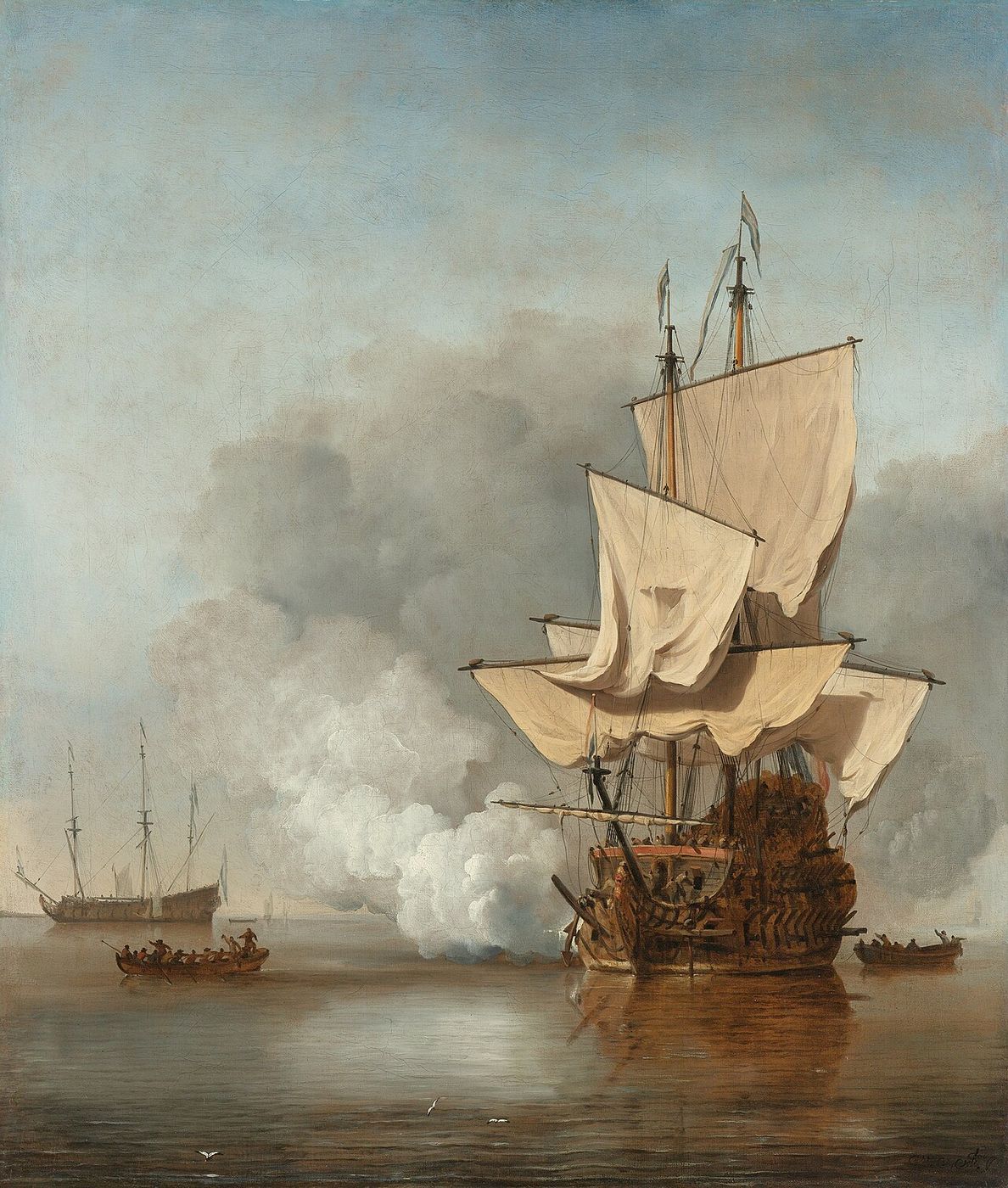
If the original ship is still afloat, the repaired one is not it; if the original has sunk, it is. Robert Nozick held that persons work the same way: you are whatever continues you most closely, as long as nothing else continues you as well.
The view
In the first chapter of Philosophical Explanations (1981), Robert Nozick proposed that a thing at a later time is the same as an earlier thing if it is that thing's closest continuer: it grows out of the earlier thing, it is close enough in the relevant respects, and nothing else that exists at the later time is as close or closer. Identity is not settled by the relation between two things alone. It depends on what else exists.
Applied to persons, the theory gives answers to the puzzle cases. In the teletransporter the replica is the closest continuer, since nothing else continues you, and so it is you. In the Branch-Line Case you, on Earth, are closer to yourself than the replica is, so the replica is someone else. In division, if both halves are equally close, there is a tie, and neither is you. If one transplant had failed, the other would have been you.
The argument
Nozick thought the theory captured how we use identity for objects as well as persons. Take the Ship of Theseus: the repaired ship is the original if the planks are thrown away, but if someone reassembles the old planks into a ship, we may well say that the reassembled one is the original. Our verdict about one candidate changes when we learn of the other. He added that persons are partly self-synthesising: we ourselves weigh which dimensions of continuity count most in being close.
Where he meets Parfit
Nozick, like Parfit, is a reductionist: there is no soul, and identity consists in continuity of a person's psychology and body. Both accept that the replica in the teletransporter can be you, and both agree that in a tie neither successor is.
Where he parts from Parfit
Parfit thought the theory showed exactly why identity cannot be what matters. On Nozick's view, whether I survive the Branch-Line Case depends on whether the scanner destroyed my body on Earth, something that happens to a different object. In division, I die if both transplants succeed and survive if one fails. But my relation to each successor is intrinsically the same either way. If identity depends on such extrinsic facts, Parfit argued, it cannot be what I rationally care about. What I should care about is the relation itself.
| Nozick | Parfit | |
|---|---|---|
| What is a person? | A self-synthesising being that weighs its own dimensions of continuity, psychological and physical. | Nothing over and above a brain, a body and a series of interrelated physical and mental events. |
| What makes you the same person over time? | Being your closest continuer: close enough to you, and closer than any rival. | Relation R, psychological connectedness and continuity, holding in one line without branching. |
| Is identity what matters? | Yes, but what counts as closest partly depends on what you care about. | No. What matters is Relation R, which can hold without identity, as in division. |
| One of you, or many? | One. If two continuers tie, neither is you. | Normally one, but the concept fails when R branches; then the question may be empty. |
Further reading
- Robert Nozick, Philosophical Explanations (1981), chapter 1, "The Identity of the Self".
- Derek Parfit, Reasons and Persons (1984), Part Three, which discusses the closest continuer theory.